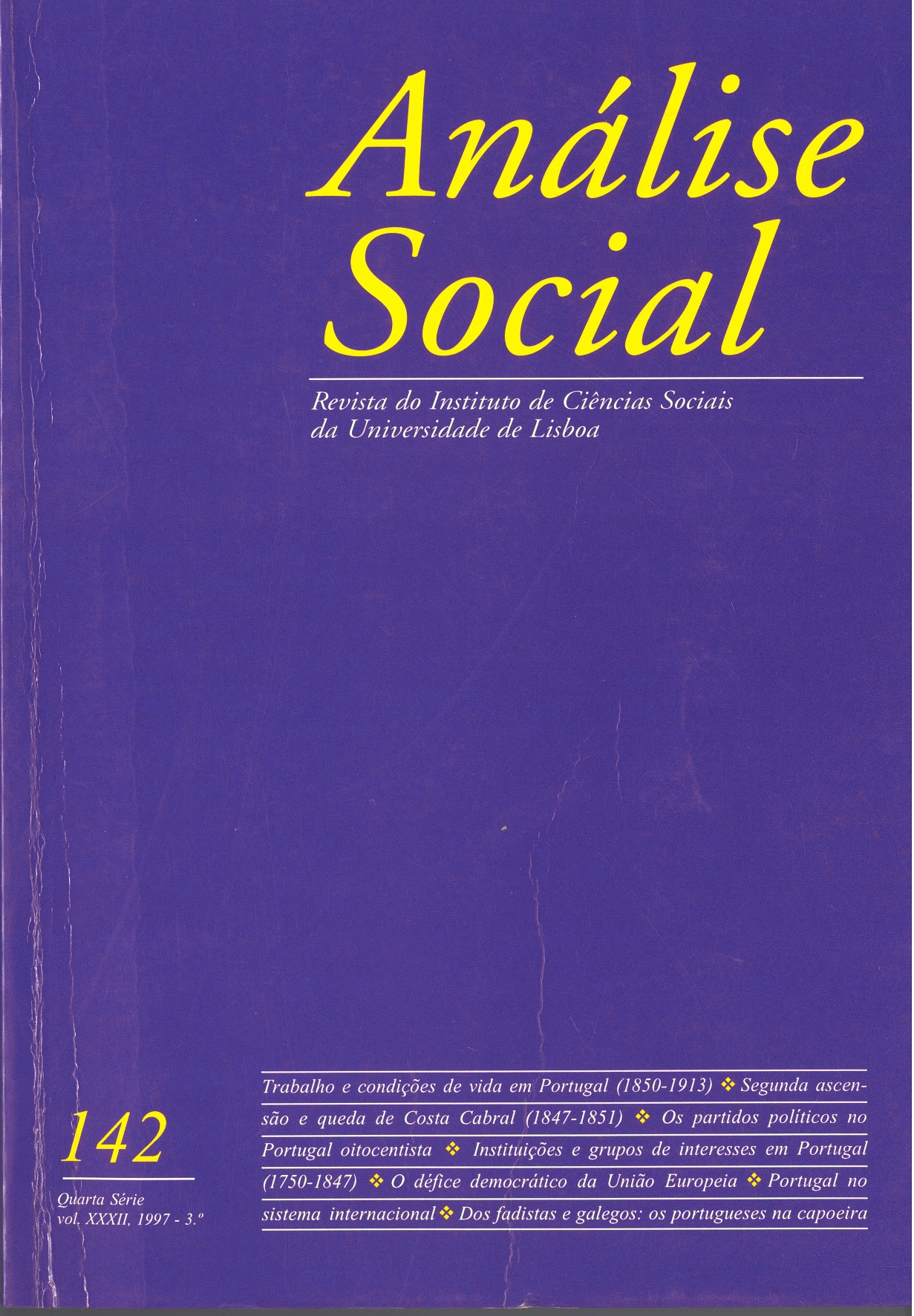
Os partidos políticos no Portugal oitocentista (discursos historiográficos e opiniões contemporâneas)
DOI:
https://doi.org/10.31447/AS00032573.1997142.03Palavras-chave:
realidade partidária portuguesa, século XIX, sistema partidárioResumo
Pretende-se analisar neste texto a realidade partidária portuguesa do século XIX, com particular ênfase no período regenerador pós-1851, a partir de um ângulo mais discursivo do que empírico: estudar as palavras com que, no presente como no passado, se falou das coisas, no caso, dos partidos e do sistema partidário, retirando daí possíveis implicações, quer no que toca à diferenciação concreta dos vários tipos de «partido» da segunda metade do século XIX, quer no que toca ao estabelecimento de balizas cronológicas para as diferentes fases da sua evolução. Na primeira parte do artigo são recenseadas, de forma introdutória, as características definidoras dos chamados «partidos de notáveis» oitocentistas, por contraposição com os «partidos de massas», típicos dos sistemas democráticos do século XX, e relembrados os preconceitos, de cariz filosófico e sócio-político, com que a cultura liberal os olhava, contribuindo largamente para a associação pejorativa entre as realidades «partido» e «facção». Seguidamente, faz-se uma revisão do (pouco) que se escreveu sobre a realidade partidária oitocentista em Portugal, em particular do mito de que o período de 1851-1890 pode ser tratado como um todo uniforme e preenchido, no que aos partidos políticos toca, pelo modelo do rotativismo bipartidário à inglesa. Na segunda parte do artigo, e partindo do pressuposto de que as opiniões, sentimentos e expectativas dos agentes históricos do passado valem como factos para o historiador do presente, recolhem-se as mais marcantes apreciações que, durante os anos da monarquia constitucional, a intelligentzia portuguesa produziu sobre o fenómeno partidário. Através do estudo do discurso e da cultura política do tempo recordam-se as razões formadoras do padrão que persistentemente se prolongou por todo o constitucionalismo oitocentista: o de que a divisão partidária era mais um mal, inevitável para uns, corrigível para outros, do que um bem. Remontando ao vintismo, a linha antipartidária do liberalismo português revelou-se estrutural, embora com oscilações de intensidade: as críticas que abundantemente eram movidas aos partidos combinavam-se, por vezes, com os elogios e as utopias reformistas que os mesmos suscitavam, mostrando que a correcta compreensão de como os contemporâneos viam o problema é um insubstituível ponto de partida para conseguir perspectivar a realidade partidária de Oitocentos, evitando tomar por realidade o que era um projecto e por defeito a lamentar o que era porventura um feitio a contextualizar.
Downloads