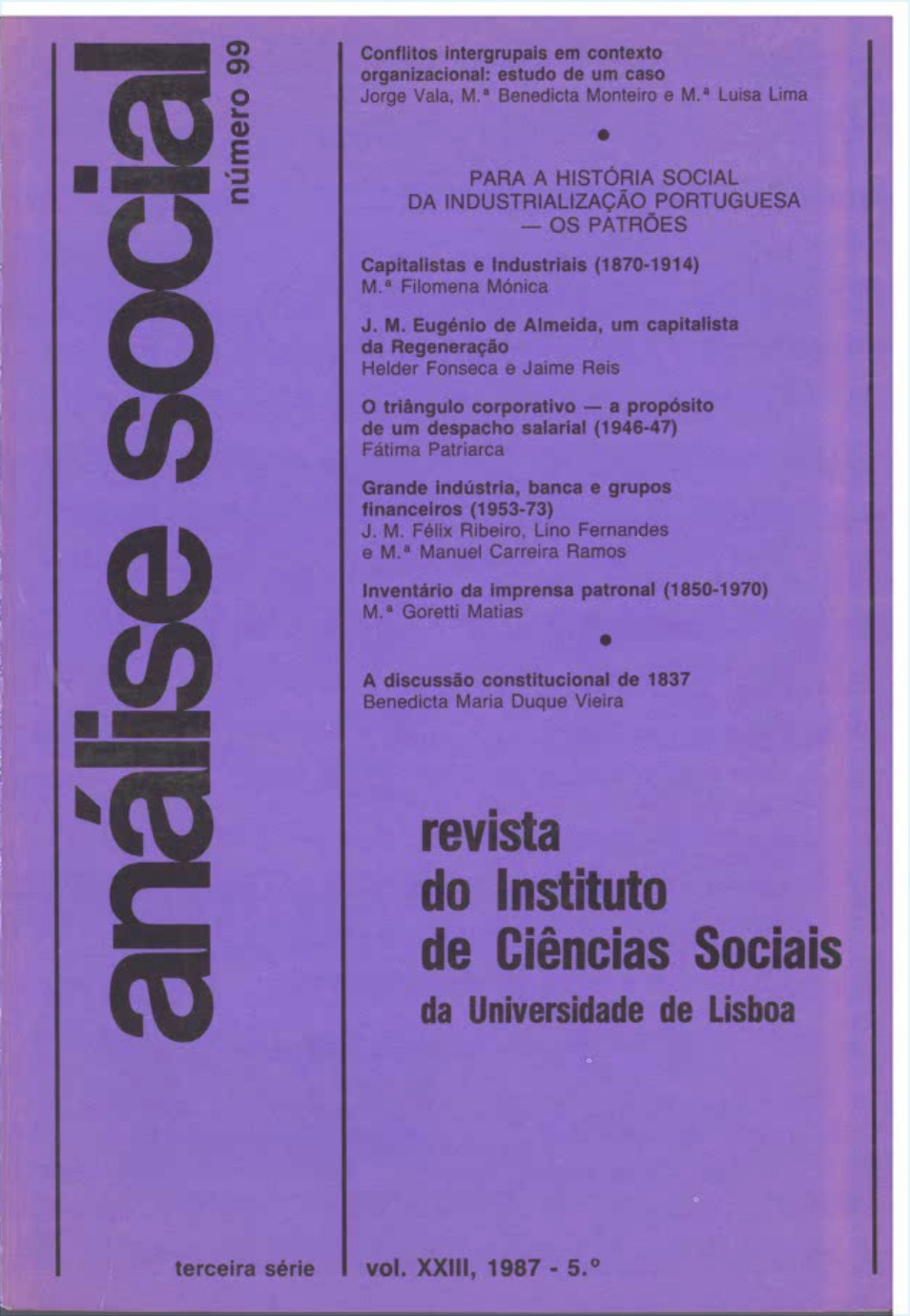
Intergroup conflicts in an organizational context: problems concerning research and intervention - a case stude
DOI:
https://doi.org/10.31447/AS00032573.198799.01Keywords:
conflict between interdependent professional groups, conflict management, social identity, intergroup relationsAbstract
In the first part of this article, different levels of an organizational conflict between interdependent professional groups are analysed. In the second part, some contributions to manage this kind of conflict are presented. Both the analysis of the conflict and the intervention hypotheses are supported by social psychological theoretical models about social identity and intergroup relations. The analysis of the conflict at the intragroup level showed a greater individual distinctiveness in the dominated or losing group than in the dominant or winning group, although such a distinctiveness only appeared when the experimental conditions stressed the ingroup belonging. As for the intergroup differentiation, besides the classical ingroup favouritism bias, which became higher when ingroup belonging was underlined, a greater outgroup discrimination in the dominated than in the dominant group appeared. Finallly, while the dominant group seemed to gather around an unidimensional, collective strategy, the dominated group seemed to adopt both individual and collective strategies. To manage this type of conflict several lines of action are presented and discussed: the definition of a superordinate goal for both groups, the design of professional tasks implying formal intergroup contact and the organization of group identity preserving activities. The advantages of a dynamic articulation between intergroup and intragroup differentiation phenomena, as well as between intergroup differentiation and intergroup cooperation are discussed, towards a better understanding of collective action.
Downloads