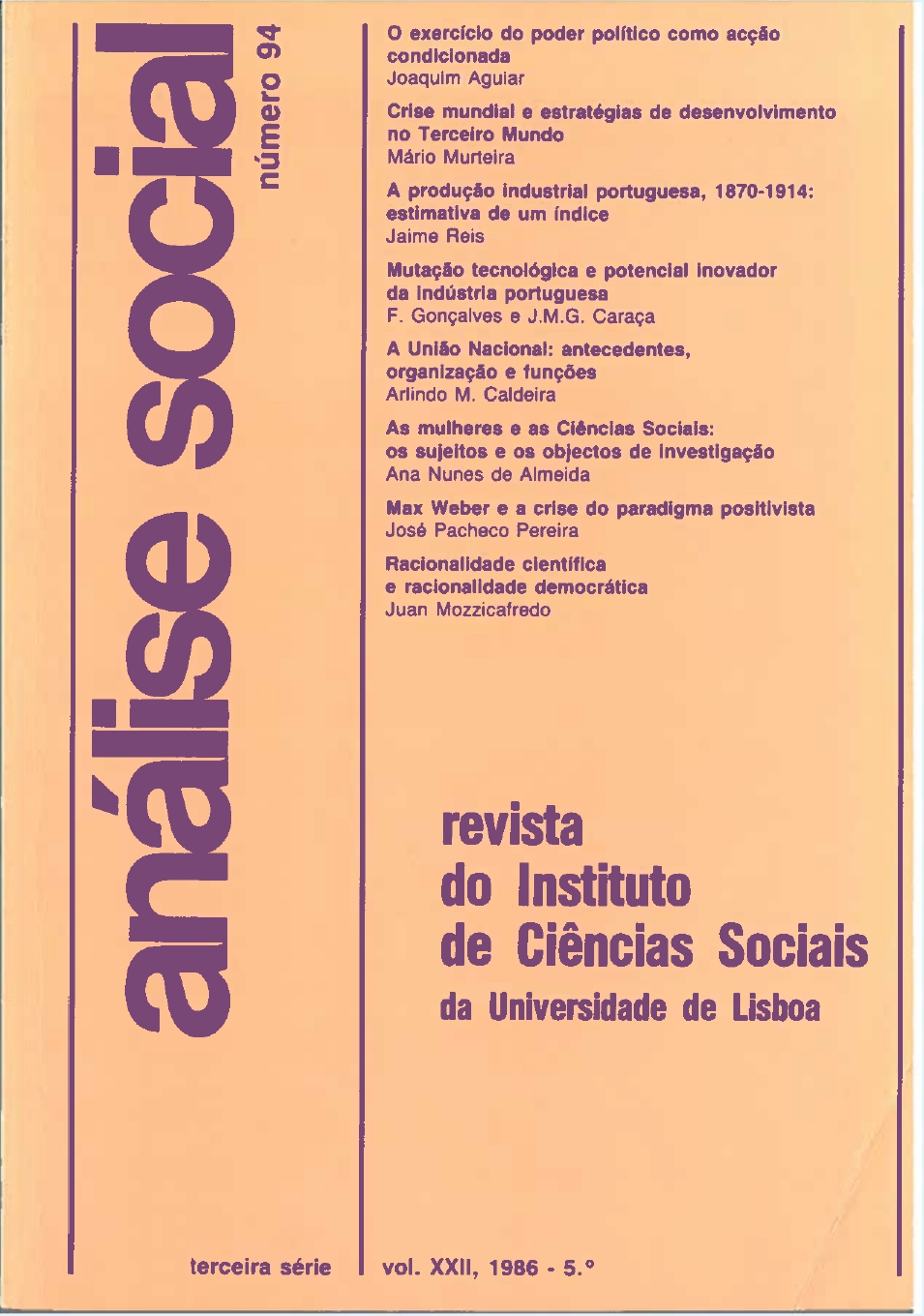
A mutação tecnológica e o potencial inovador da indústria transformadora
DOI:
https://doi.org/10.31447/AS00032573.198694.04Palavras-chave:
indústria transformadora portuguesa, escalões de intensidade tecnológica, capacidade autónoma de inovação, assimilação das tecnologias externas, trajectórias tecnológicasResumo
As diferenças de potencial tecnológico das diversas economias conduzem a que se estabeleçam entre elas fluxos de tecnologia, sendo maioritárias as ligações em que os países de mais elevado potencial funcionam como fornecedores. As relações estabelecidas neste quadro conduzem a uma dependência que se vai tendencialmente acentuando ao longo do tempo. Neste artigo são analisadas as consequências de tal evolução, tendo como referencial os diferentes tipos de trajectórias tecnológicas, noção com base na qual se discutem os aspectos tecnológicos estruturais e globais da indústria transformadora portuguesa. Partindo da aceitação do princípio de que nem todas as actividades são incorporadoras de tecnologia de forma semelhante, os autores estabelecem escalões de intensidade tecnológica associada para a indústria transformadora nacional (1982), comparando diferentes tipos de indicadores com os dos valores médios (1970-80) de 11 países desenvolvidos da OCDE. Os autores concluem que se torna necessário definir uma estratégia capaz de inflectir as tendências diagnosticadas, a qual deverá passar pela assunção de um esforço inovador de cariz estratégico que minimize a vulnerabilidade da nossa indústria, o que permitirá, por um lado, incrementar a capacidade autónoma de inovação e, por outro, reforçar a assimilação das tecnologias de origem externa.
Downloads