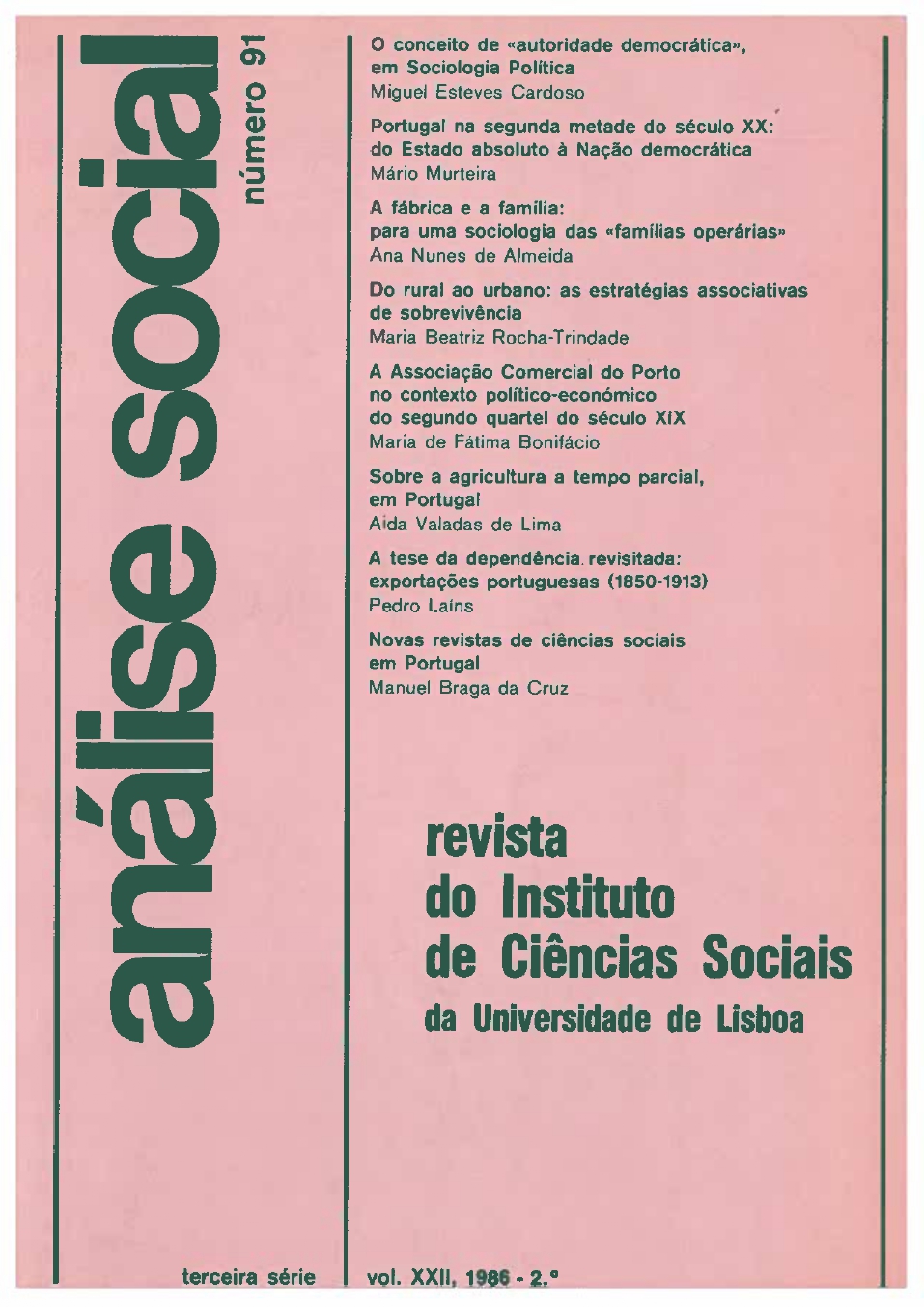
(Portugal in the periphery of Europe during the second half of the 20th century) - How an obsolete state came to be a democratic nation
DOI:
https://doi.org/10.31447/AS00032573.198691.02Keywords:
Portuguese political regime, dictatorship, democracyAbstract
Politically and economically more talented to perform balanced routine duties than to achieve the «creative destruction» mentioned by Schumpeter when he characterized the logic of capitalist development, the regime prolonged an obsolete colonial empire up to the very limit of its historical viability. Internally, both the social relationship between the working people and the State and the relationship between the citizens and the political power were obsolete, too. A worldwide strong economical crisis had enabled the regime to structure and to strengthen itself together with other totalitarian regimes in Europe; it collapsed when a new worldwide economical crisis definitely stopped the growth of capitalism in the centre, as collapsed the last dictatorships in shouthern Europe. The author attempts to justify these seeming historical «coincidences» within the framework of the evolution of Portugal in the periphery of Europe, since the fifties of this century.
Downloads