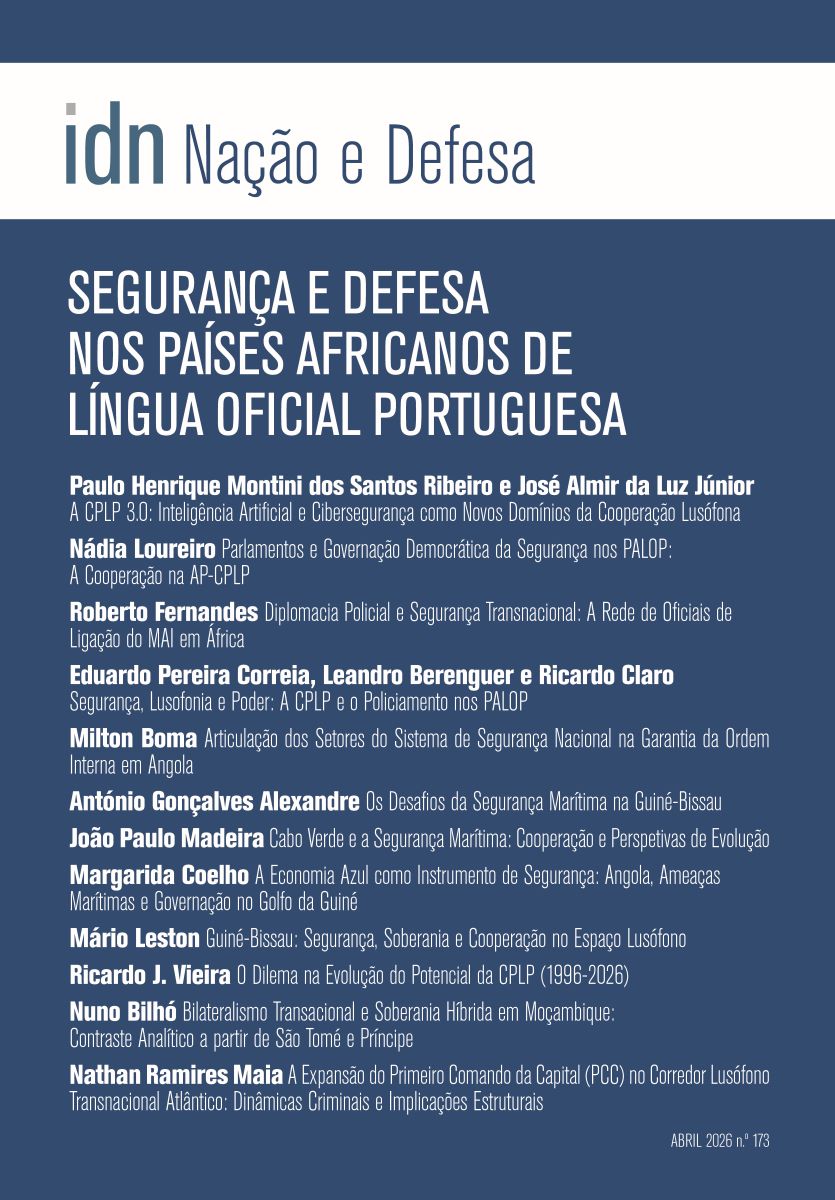
Diplomacia Policial e Segurança Transnacional
A Rede de Oficiais de Ligação do MAI em África
DOI:
https://doi.org/10.47906/ND2026.173.03Keywords:
International cooperation, CPLP, police diplomacy, PALOP, transnational securityAbstract
The security landscape of the Portuguese-Speaking African Countries (PALOP) is increasingly shaped by complex transnational threats, including terrorism, organised crime, drug and arms trafficking, piracy, and irregular migration. This article examines Portugal’s Ministry of Internal Administration liaison officers´ network (ROLMAI) as both a strategic instrument of police diplomacy
and a mechanism for strengthening the Lusophone security architecture. The study focuses on three core dimensions: the identification of the principal threats to the security and defence of the PALOP; the function of the liaison officers in promoting
bilateral and multilateral police cooperation; and the interaction of the network with regional and international actors, such as the CPLP, the African Union, ECOWAS, and SADC. Drawing on document analysis, official reports, and selected case studies, the findings indicate that ROLMAI operates as a dual vector: it reinforces cooperative security mechanisms among Lusophone countries
while simultaneously projecting Portugal’s soft power and strategic influence across the Atlantic and Indo-African spaces. Nevertheless, the study highlights that the sustainability of this model depends on structured, long-term strategies capable of integrating operational effectiveness with political legitimacy and the safeguarding of human rights.