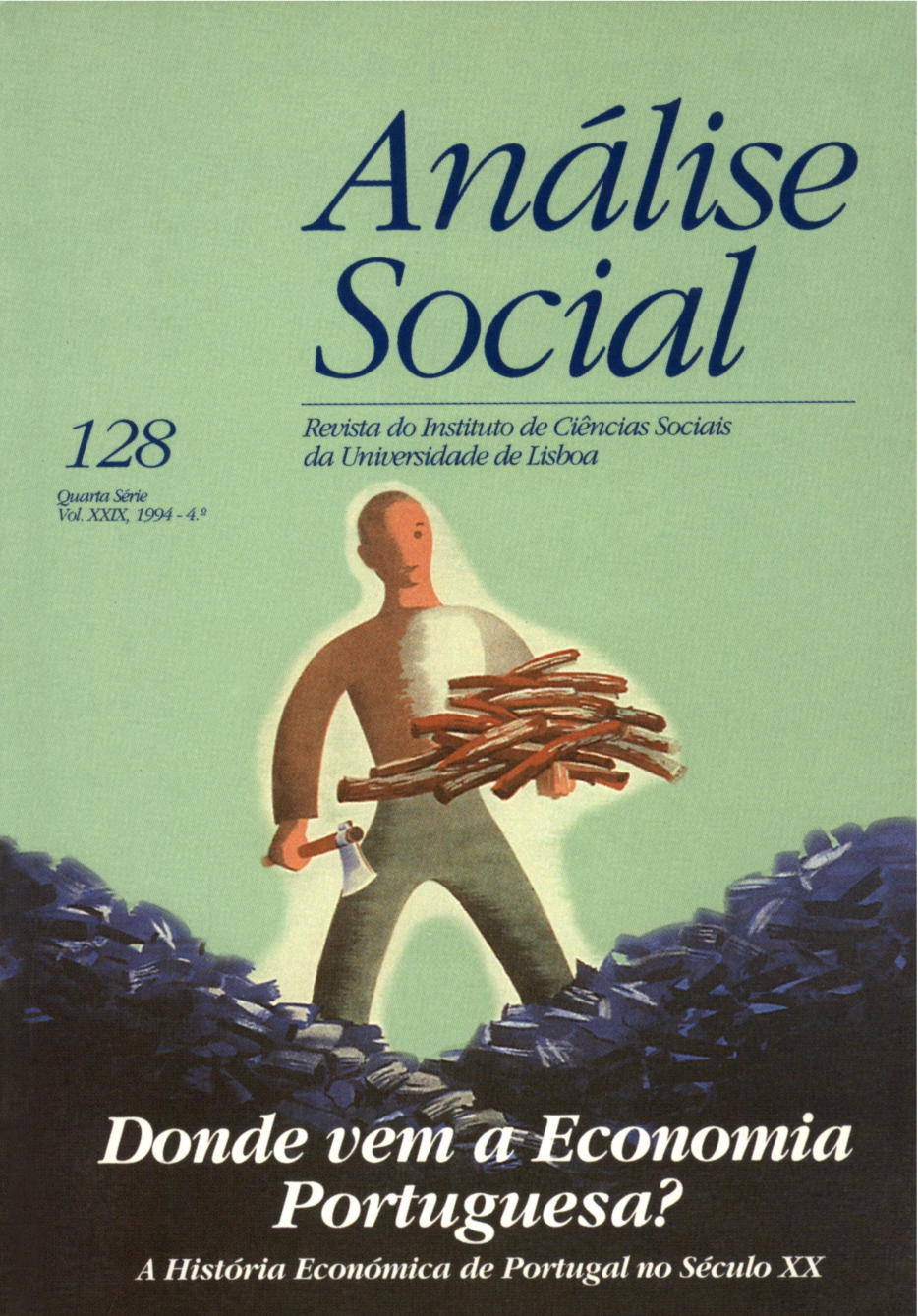
Portugal and the past: agrarian policy, pressure groups and the development of Portuguese agriculture under the New State (1950-1973)
DOI:
https://doi.org/10.31447/AS00032573.1994128.06Keywords:
Portuguese agriculture, 1950-1973, agricultural policies of the New State, factions opposed to the large landownersAbstract
This article outlines the development of Portuguese agriculture between 1950 and 1973 and the main agricultural policies of the New State during this period. In this second area, it seeks to demonstrate that the members of the regime were divided into several factions, which included some who were strongly opposed to the large landowners and in favour of agrarian reform. Although the reformers never succeeded in having their policies adopted, they were closer to achieving this than is sometimes thought. The Alentejo landowning lobby successfully defeated their attempts in this direction. However, although the landowners may be considered to have been backward at the beginning of the period under study, they started to modernise in some respects in the I960's, in the wake of industrialisation of the country. By 1973 the Portuguese economy had been radically transformed, and agriculture had been relegated to a very secondary role. Agriculture was undoubtedly being modernised, but as far as can be discovered, moves in this direction were insufficient to meet the needs of an increasingly industrial and urban economy.
Downloads