
Archives - Page 2
-

Forest Reform
Vol. 4 No. 3 (2017)According to the 10th interim report by the ICNF1, between 1 January and 31 October 2017, the national forest fire database (Forest Fire Information Management System – SGIF) recorded 3,653 forest fires and 13,328 fire outbreaks, which resulted in 442,418 hectares of burnt forest area, comprising both stands (264,951 ha) and scrubland (177,467 ha). These figures represent a 428% increase in burnt area compared to the annual average for the period. In addition to the ecological and property damage, the fires of the long summer of 2017 caused more than a hundred deaths. This situation triggered a frenzy of reform among policymakers, leading to the introduction of various pieces of legislation relating to forest land-use planning, with a view to preventing the recurrence of similar incidents.
-

Revision of the Public Contracts Code
Vol. 4 No. 2 (2017)O presente número da e-Publica dedica um destaque temático à revisão do Código dos Contratos Públicos. Como é sabido, impunha-se ao legislador nacional a transposição das diretivas europeias sobre contratos públicos, de 2014, o que deveria ter ocorrido, para a maioria das disposições das diretivas, até abril de 2016. Ao cabo de um longo processo legislativo, a revisão veio a concretizar-se no Decreto-Lei n.º 111-B/2017, de 31 de agosto, entretanto retificado pela Declaração de Retificação n.º 36-A/2017, de 30 de outubro. O diploma altera profundamente o Código dos Contratos Públicos, que é republicado. A revisão entrará em vigor em 1 de janeiro de 2018.
-

The Portuguese Constitutional Court’s Jurisprudence of Crisis
Vol. 4 No. 1 (2017)In May 2011, Portugal requested financial assistance from the European Commission, the European Central Bank, and the International Monetary Fund, in order to overcome the structural challenges faced by the Portuguese economy, the threat of contagion from the sovereign debt crisis and the adverse conditions faced by the Portuguese banking sector.
-

40th Anniversary of the Constitution of the Portuguese Republic
Vol. 3 No. 3 (2016)The present study seeks to demonstrate that the interpretation and application of the current text of the Portuguese Constitution cannot undervalue two important phenomena, which establish its present context or framework, such as the decisive influence of European constitutional law and judicial review, in particular the decisions of the Portuguese Constitutional Court, in dialogue with the jurisprudence of the Court of Justice of the European Union and the European Court of Human Rights.
The most appropriate way of honouring the 1976 Constitution, celebrating its mature forty years and vowing a long life as a life-giving and regulating source of our democratic regime, is to “read” its “text” considering the significance of historical changes, which is perceived by its current “framework”, constituted above all by European Union law and judicial review. Only then can the Portuguese Constitution of 1976 be a Constitution of our age and for our time. -

Refugee Status and European Union Immigration Policy
Vol. 3 No. 2 (2016)This paper reassesses the constitutional foundations of the EU common policy on asylum, subsidiary and temporary protection and critically reviews the legislative acts under which the Common European Asylum System – as a normative expression of said policy – is structured. The so-called “unprecedented migratory and refugee crisis” that defined 2015 and is still ongoing – with no end in sight – has shown several weak aspects of the aforementioned system as well as its inability to meet such crisis. Notwithstanding, several measures of different nature aiming at that particular purpose have been adopted at the EU level. These measures are evaluated at the end of the paper together with the controversy they entail.
-

Bank Resolution Measures and the Financial System
Vol. 3 No. 1 (2016)Using the resolution applied to Banco Espírito Santo as an example, we suggest a short consideration of legal, regulatory and political aspects in relation to banking failure. We conclude that if the legal, regulatory and political dimensions are ignored, banking resolutions could increase transaction costs more generally than otherwise.
-

Global Administrative Law and the Concept of Law
Vol. 2 No. 3 (2015)In the last decade, Global Administrative Law (GAL) has become one the most relevant legal accounts of global governance. In spite of this – or pour cause –, many aspects of its proposed methods and construction as a field of knowledge are highly contested. Being at a crossroads between Public International Law and Administrative Law, GAL encompasses the structures, procedures, and normative standards for regulatory decision-making, as well as the mechanisms of adjudication and implementation of these standards and other Public Law rules by different global administrative bodies.
-

Law and the Future - A Legal Perspective on Intergenerational Justice
Vol. 2 No. 2 (2015)‘Law and the Future - A Legal Perspective on Intergenerational Justice’ is an innovative venture in the field of Law in Portugal. This issue gathers the ideas of reputed international and national scholars, of young and promising researchers as well as of institutional representatives which were presented at the ‘International Conference on Intergenerational Justice – The Law of the Future And the Future of Law’.
-
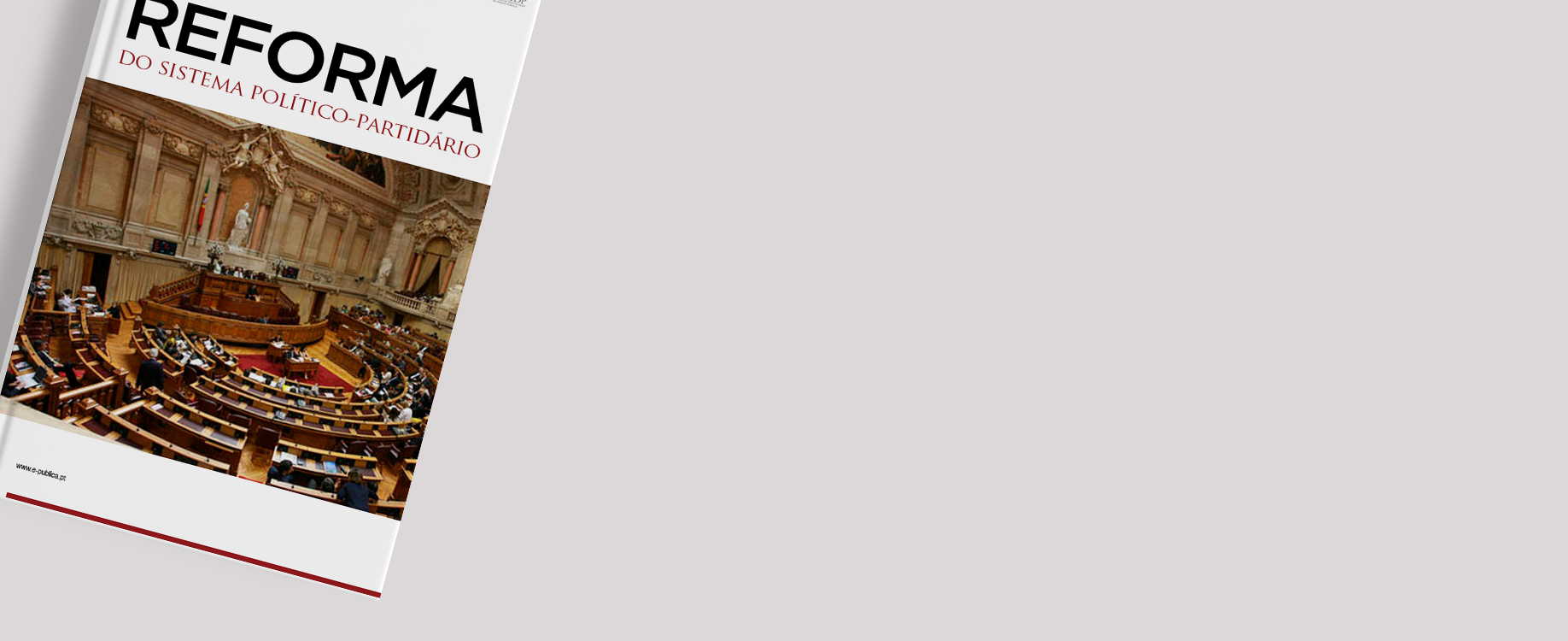
Reform of the Political Party System
Vol. 2 No. 1 (2015)Using always a comparative perspective, the present article scrutinizes the major problems associated with political reforms, namely in choosing the more appropriate electoral system in each case. In general, the different existent electoral systems have underlying objectives that, at least according to some authors, define the system of representation that characterizes each polity. The different objectives that each electoral system tries to reach, as well as the instrumental devices used to fulfill them, are not always easy to conciliate, i.e. some trade-off is almost always necessary between different objectives and devices. Comparing the Portuguese case with other 27 European countries, we analyze such trade-offs along three dimensions: proportionality; executive stability; the quality of political representation. The underlying objective of this all endeavor is to understand which are the most need electoral reforms in Portugal, taking into account the performance of the system in a comparative perspective. Additionally, the paper also analyses a recent proposal for electoral reform in Portugal, presented to the public by two academics in the end of 2014.
-

Social rights and the 70th anniversary of the ‘Second Declaration of Rights’
Vol. 1 No. 3 (2014)In early 1944 the victory of the Allied forces in World War II was already almost certain. The question was to know which peace would follow the bloodiest armed conflict that history had ever known. It was in this context that, on January 11, 1944, in his speech to Congress on the state of the Union, President Frank Delano Roosevelt launched his proposal for a ‘Second Bill of Rights’.
-

Public Education Policy
Vol. 1 No. 2 (2014)The first part of this article analyzes the concepts of culture and education, as objects of Education Law, both in an international and national perspective. The second part presents the most relevant provisions of Portuguese and Brazilian Constitutions on this matter and, finally, the third part deepens the analysis and the scope of the protection of the freedom of education and the right to education in the Portuguese Constitution, including also a list of the major Portuguese Constitutional court’s decisions.
-

Pensions, public sector employment and the Troika
Vol. 1 No. 1 (2014)The prima facie constitutional triad is not ‘liberty, equality, fraternity’ but rather ‘equality, proportionality, and legitimate expectations’. The principles of equality, proportionality and the protection of legitimate expectations have, at the very least, the function they perform in common: they are instruments for mediating processes of weighing up and optimisation and, to that extent, vehicles of the prima facie constitution. In Portugal, they also share the circumstantial fact of being the parameters most frequently invoked by those who have raised the question of the constitutionality of legislative provisions that reduced the amounts of wages and pensions paid from resources covered by the State Budget (‘cuts’). In response, the constitutional judge has attributed unequal relevance and impact to them. The principle of equality has been the primary basis for declaring some of those ‘cuts’ unconstitutional. The principle of the protection of legitimate expectations has frequently been put to the test, but only one recent ruling of unconstitutionality has been based exclusively on its violation. The principle of proportionality, despite being repeatedly invoked by the applicants in constitutional review proceedings, has been relegated to a subsidiary role (or perhaps a veiled application?). For the decisions of the constitutional judge to be considered rational from a practical point of view, it is necessary for those instruments to be rational from a theoretical point of view²: their dogmatic and argumentative structure must be clear, transparent, coherent and stable, particularly in their evaluative component, so as to be immune to the accusation that they merely reflect the judges’ ideological leanings. The extensive case law on pension ‘cuts’ established in recent years by the Constitutional Court provides an opportunity to assess whether this has been the case. In section 1, we will briefly focus on the concept of prima facie constitutionality and its vehicles. In section 2, we will examine the principle of equality as a limit on pension ‘cuts’. In section 3, we will examine the principle of the protection of legitimate expectations as a limit on pension ‘cuts’. In section 4, we will examine the principle of proportionality as a limit on pension ‘cuts’.
Previous
26-37 of 37


