The path of Universal Design for Learning in brazilian scientific production from 2017 to 2023: from theory to practice
DOI:
https://doi.org/10.34627/redvol8iss2e202510Keywords:
Universal Design for Learning, inclusive education, inclusive pedagogical practice, integrative reviewAbstract
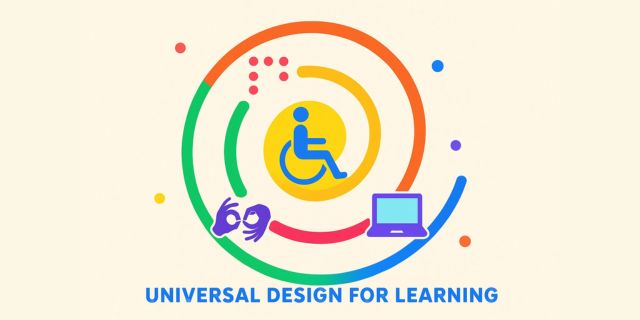
Universal Design for Learning (UDL) is an approach that seeks to make the curriculum accessible to all students, based on three principles: engagement, representation, and action/expression. This study aims to identify educational practices, advances, and challenges in the application of UDL in classrooms, analysing Brazilian scientific production between 2017 and 2023. The investigation was conducted through an integrative review, guided by the PRISMA protocol. The search on the CAPES Journal Portal resulted in 167 publications, of which 11 met the inclusion criteria. The results indicate that, although there is growing theoretical discussion about DUA, its practical implementation is still limited and concentrated mainly in mathematics teaching, with isolated experiences in other areas. The practices reveal potential for expanding inclusion and making teaching more flexible, but they are still limited to isolated adaptations and lack systematic impact assessments. It is concluded that the consolidation of DUA in Brazil requires greater integration of its principles and the production of consistent evidence, in dialogue with the theme‘ Inclusion and digital accessibility’ proposed by this issue of the Journal of Distance Education and eLearning-RE@D.
Downloads
Published
How to Cite
Issue
Section
License
Copyright (c) 2025 Leociléa Aparecida Vieira, Gabrielli Fernanda dos Santos Chagas, Laryssa Bahia da Luz Matilde, Keli Casagrande

This work is licensed under a Creative Commons Attribution-NonCommercial 4.0 International License.
Os autores conservam os direitos de autor pelo seu trabalho e concedem à revista o direito de primeira publicação, com o trabalho simultaneamente licenciado sob uma Licença Creative Commons - Atribuição-NãoComercial 4.0 Internacional.

