Elements of assistive technology in serious games: reinventing school from an inclusive perspective for students with disabilities
DOI:
https://doi.org/10.34627/redvol8iss3e202518Keywords:
inclusion, assistive technology, accessibility, serious games, disabilityAbstract
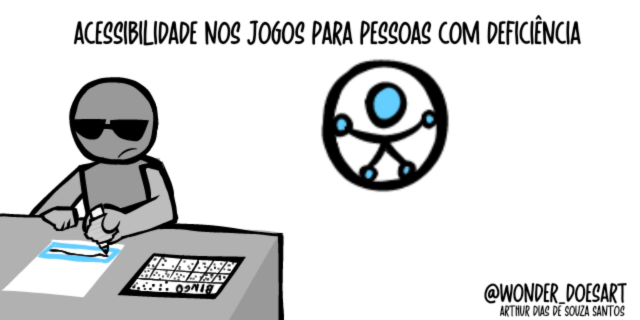
TThis study aims to share reflections and practices in the field of digital resources in the context of inclusive education with perspective for people with disabilities. A qualitative methodology was adopted, with a bibliographic approach based on authors who discuss the social model of people with disabilities, accessibility, Assistive Technology, serious games that can include people with disabilities and, more specifically, the educational area. These studies highlight the importance of developing serious games with a flexible approach to meet the diversity of students with disabilities. In the first study, accessibility was addressed with a special focus on the visual, auditory and physical dimensions. In the second, some guidelines were defined for the use of serious games by people with intellectual disabilities on mobile devices. In the third, a Systematic Literature Review was carried out to evaluate studies on serious games for people with intellectual disabilities, with the aim of facilitating their implementation in the educational context. We can conclude that serious games are a valuable tool in the process of inclusion of students with
disabilities. However, it is essential to be attentive to the insertion of AT elements in these games, providing opportunities for the participation of people with disabilities and research groups in the area with universities from the beginning of the game project until its production and dissemination, in order to ensure that its accessibility dimensions are adequately met.
Downloads
Published
How to Cite
Issue
Section
License
Copyright (c) 2025 Elen Gomes Pereira, Cristina de Araújo Ramos Reis

This work is licensed under a Creative Commons Attribution-NonCommercial 4.0 International License.
Os autores conservam os direitos de autor pelo seu trabalho e concedem à revista o direito de primeira publicação, com o trabalho simultaneamente licenciado sob uma Licença Creative Commons - Atribuição-NãoComercial 4.0 Internacional.

