Google Classroom in Hybrid Teacher Work: Mediation Functions and Invisible Labour
DOI:
https://doi.org/10.34627/redvol9iss2e202616Keywords:
Google Classroom, hybrid settings, digital mediation, teacher collaboration, sociotechnical infrastructuresAbstract
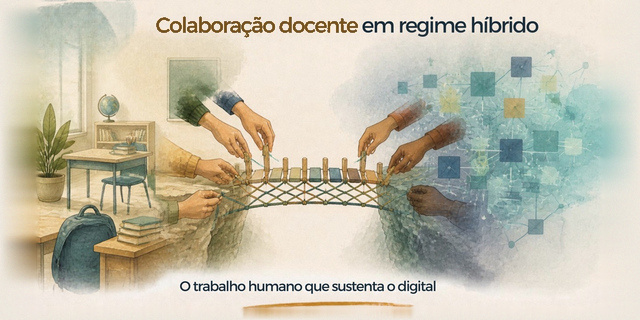
This article analyses how Google Classroom was integrated into collaborative teacher work in a hybrid setting. The analysis focuses on the relationship between the potential attributed to the platform and the ways in which it was effectively appropriated by teachers involved in an interdisciplinary project. The study is part of qualitative interpretative research, framed by participatory action research, developed with six secondary school teachers from a school cluster in the Algarve, Portugal, during the 2024/2025 school year. Data collection included semi-structured interviews, focus groups, participant observation, analysis of digital artefacts and reflective journals. The findings show that Classroom performed relevant functions of organisation, collective memory and continuity of work between sessions, supporting the structuring and facilitation of the collaborative environment. However, it revealed limitations as a space for in-depth pedagogical deliberation, which occurred mainly in synchronous and face-to-face environments. The platform’s effectiveness depended on a distributed ecology of mediation and on human work involving curation and maintenance. The study contributes to a critical understanding of digital learning management platforms as infrastructures for mediating professional teacher work.
Downloads
Published
How to Cite
Issue
Section
License
Copyright (c) 2026 Graça Delicado, Cláudia Neves

This work is licensed under a Creative Commons Attribution-NonCommercial 4.0 International License.
Os autores conservam os direitos de autor pelo seu trabalho e concedem à revista o direito de primeira publicação, com o trabalho simultaneamente licenciado sob uma Licença Creative Commons - Atribuição-NãoComercial 4.0 Internacional.