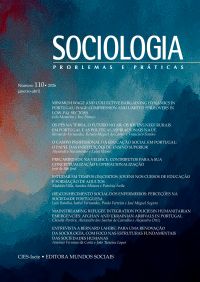
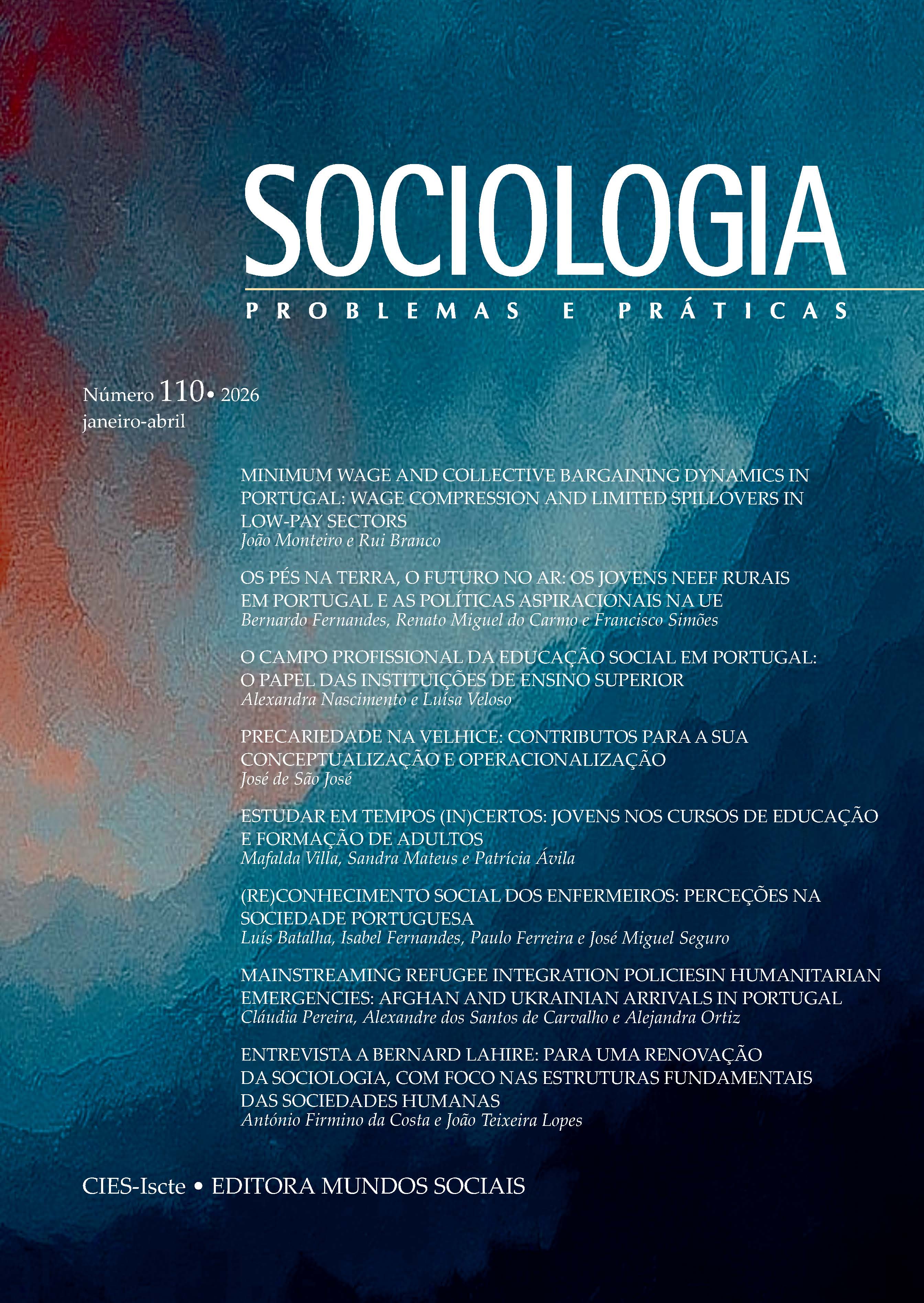
Minimum wage and collective bargaining dynamics in Portugal: wage compression and limited spillovers in low-pay sectors
DOI:
https://doi.org/10.7458/SPP202611042174Keywords:
low pay, statutory minimum wage, collective bargaining, pay equity, bitte and spillover effectsAbstract
The article examines how the steady increases in the statutory minimum wage (SMW) following the end of the Troika adjustment programme in 2014 have impacted the wage distribution and collective bargaining dynamics in low-pay economic sectors in Portugal. It aims at contributing to the literature on the SMW pay equity effects by specifying the mechanisms through which SMW rises shape collective bargaining, wage compression and wage spillovers. Using a mixed-methods research design that combines statistical data from Quadros de Pessoal with semi-structured interviews with social actors and government officials, it shows that wage compression and spillovers are contingent on the institutional and structural features of low-pay sectors, such as exposure to price competitiveness or reliance on the state along a neo-corporatist logic. Moreover, the evidence suggests that spillovers are curtailed when SMW increases are not accompanied by the reinforcement of other labour market institutions.
Downloads
Published
Issue
Section
License
Copyright (c) 2026 João Monteiro, Rui Branco

This work is licensed under a Creative Commons Attribution 4.0 International License.
Authors who publish in this Journal must agree the following terms and conditions:
- Authors retain copyright and grant the Journal the right to first publication, while simultaneously agreeing to a Creative Commons Attribution License, which allows others to share their work on condition that they cite the original author(s) and recognise that the latter’s work was first published in this Journal.
- Authors are authorised to enter into additional contracts separately, for non-exclusive distribution of the version of the work that is published in this Journal (e.g. publication in an institutional repository or as a book chapter), subject to recognition of initial publication in this Journal.