Visuality, Accessibility, and Narratives: Screenplays for and with Deaf People
DOI:
https://doi.org/10.34627/redvol8iss3e202519Keywords:
Bimodal bilingualism, Screenplay, Sign language, Deferred textualityAbstract
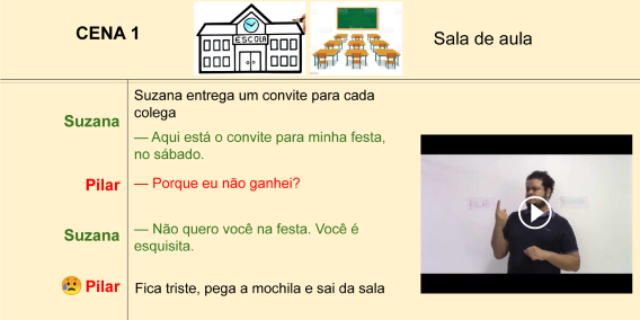
With advances in inclusive education and bilingual education for the Deaf people, alongside the growing demand for pedagogical materials tailored to the specific needs of these students, this research investigates the development of screenplays with an emphasis on accessibility and the recognition of Deaf linguistic and cultural identity. Through a focus group, the challenges faced in understanding traditional screenplay formats were discussed, highlighting the need for formats that integrate visual and linguistic elements appropriate to Deaf culture. As a result of this dialogue, a screenplay model was proposed, combining imagery, Portuguese text, and sign language videos in a deferred textuality approach, providing a tool designed to facilitate the creation, revision, and appropriation of screenplays by Deaf individuals. This approach aims not only to promote inclusion but also to respect and value Deaf cultural identity in the filmmaking process.
Downloads
Published
How to Cite
Issue
Section
License
Copyright (c) 2025 Oscar Raimundo dos Santos Júnior, Soeli Francisca Mazzini Monte Blanco, Fabíola Sucupira Ferreira Sell, Tatiana Bolívar Lebedeff

This work is licensed under a Creative Commons Attribution-NonCommercial 4.0 International License.
Os autores conservam os direitos de autor pelo seu trabalho e concedem à revista o direito de primeira publicação, com o trabalho simultaneamente licenciado sob uma Licença Creative Commons - Atribuição-NãoComercial 4.0 Internacional.

